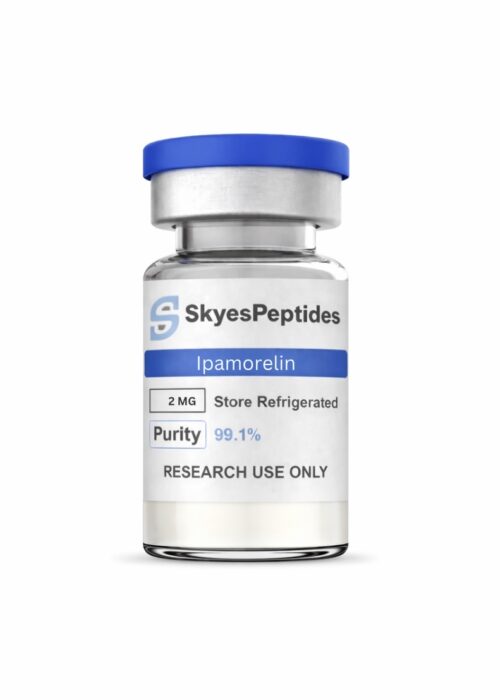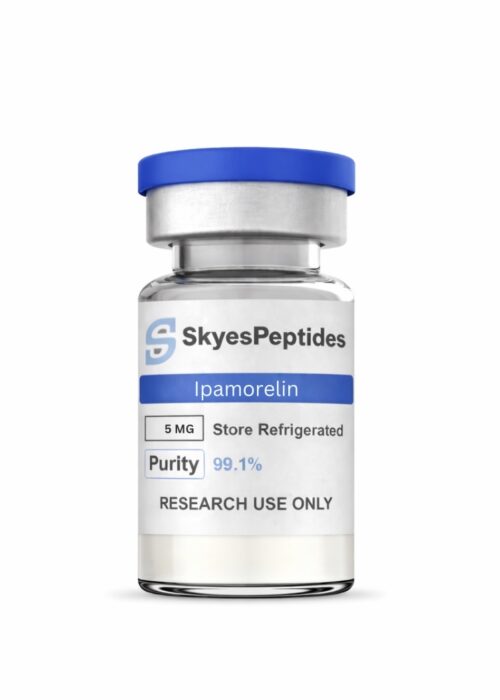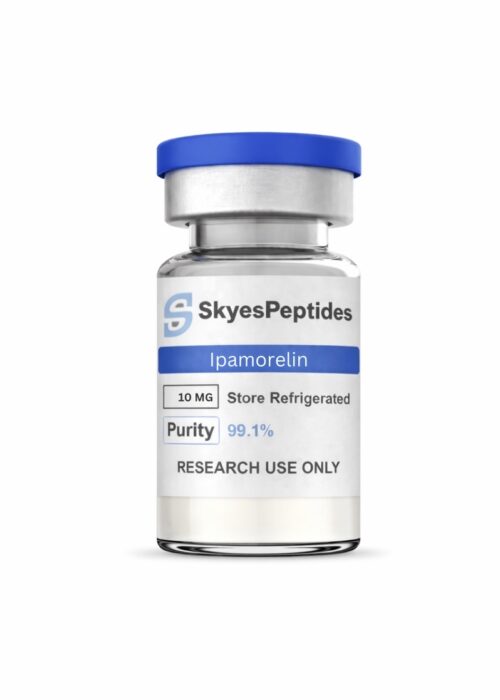
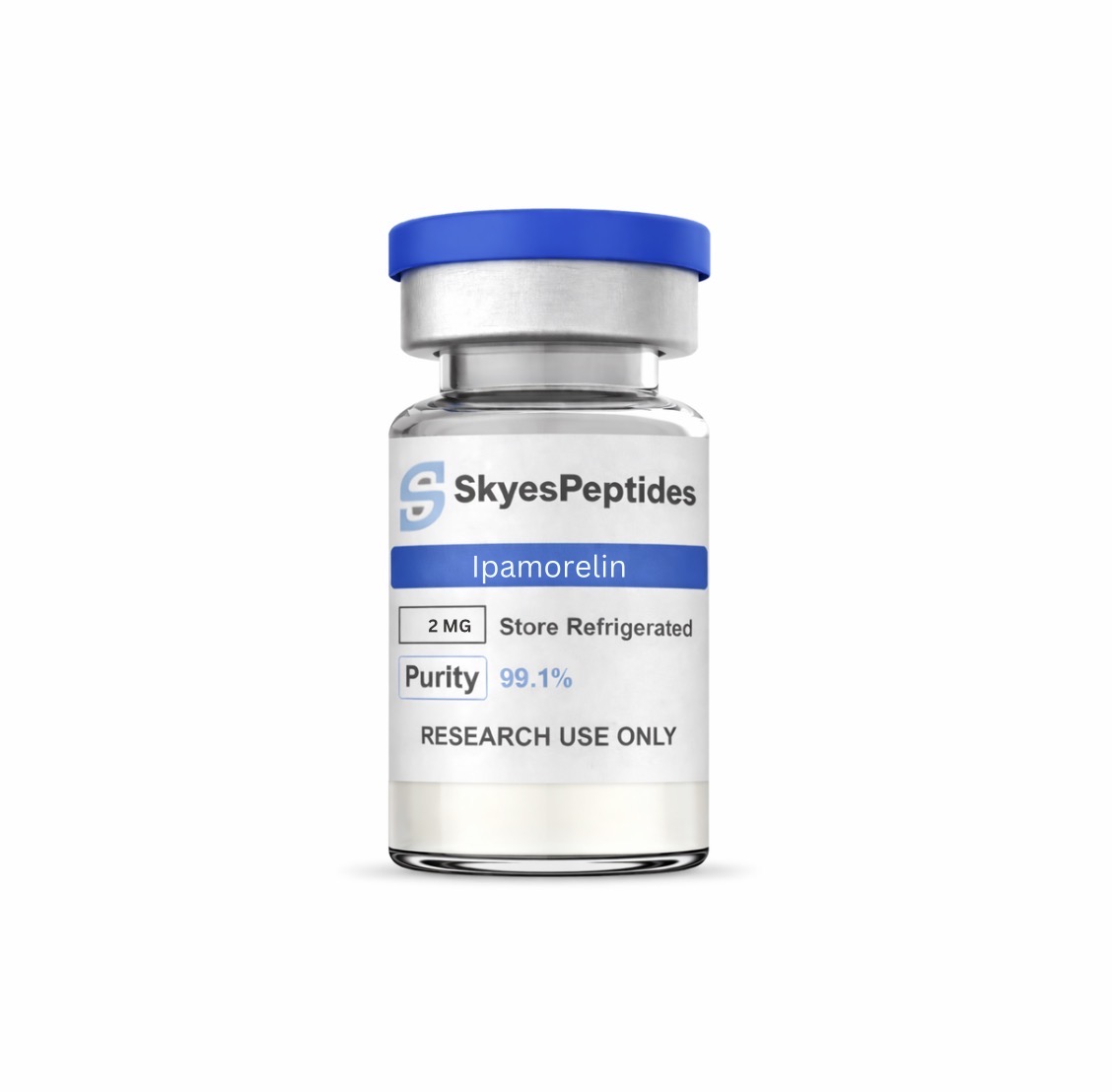
Skye Peptides Ipamorelin is a branded search phrase used by researchers looking for product specifications, available formats and supporting documentation for Ipamorelin. This guide brings those details together without providing dosing, reconstitution or personal-use instructions. All catalogue materials discussed here are intended strictly for qualified laboratory, analytical and research applications.
What Is Ipamorelin?
Ipamorelin is a synthetic pentapeptide and selective growth-hormone secretagogue receptor agonist. Scientific interest commonly centers on receptor selectivity, pulsatile growth-hormone signaling and endocrine-model responses. The most useful interpretation starts with the material’s exact identity, formulation and experimental context rather than broad claims based only on its name.
Researchers should also distinguish the catalogue product from similarly named medicines, supplements or finished formulations. Experimental findings should not be converted into personal-use conclusions. This distinction helps keep study design, documentation and conclusions aligned with the evidence actually available.
Skye Peptides Ipamorelin Product Options
The current catalogue includes the following relevant listings. Opening the product page allows researchers to review the stated amount, pack format and any available testing information:
Availability and batch details can change. Confirm the current specification on the individual product page before ordering material for a planned experiment.
Research Interest and Experimental Context
Work involving Ipamorelin may examine receptor selectivity, pulsatile growth-hormone signaling and endocrine-model responses. A sound protocol defines the model, controls, endpoints and analytical method in advance. Findings from isolated cells, animals or biochemical assays should be reported according to that model and should not be generalized beyond it.
Where multiple strengths or pack formats are available, selection should be based on the approved laboratory protocol and required analytical quantity—not personal administration. Researchers should document product identity, batch, storage history and handling conditions so that later results remain reproducible.
How to Evaluate Quality Documentation
A useful supplier assessment begins with identity rather than a headline purity percentage. Researchers should look for a chromatogram, mass confirmation, the test date, a traceable batch identifier and a report that corresponds to the exact material being offered. Purity and identity answer different questions, so both deserve attention.
Review the centralized test reports and match the relevant record to the product and batch whenever possible. A report from a different product, strength or historic batch should not be assumed to represent current stock.
Storage, Handling and Recordkeeping
Follow the storage information supplied with the product and the requirements of the receiving laboratory. Limit unnecessary environmental exposure, maintain a documented chain of custody and record dates of receipt and analysis. Laboratories should use calibrated equipment, trained personnel and procedures appropriate to the compound’s chemical class.
The research catalogue can be used to compare related materials, while the About page explains the supplier’s stated quality approach. Product-specific questions should be sent through the contact page before purchase.
FAQ
What does “Skye Peptides Ipamorelin” refer to?
It refers to the Ipamorelin research listings available through the Skye Peptides catalogue. The exact format and quantity are shown on the linked product pages.
Is a purity percentage enough to confirm product quality?
No. Purity is only one part of evaluation. Identity testing, batch matching, quantity information, report date and laboratory verification are also important.
Is Ipamorelin intended for personal use?
No. Products discussed on this site are supplied strictly for research use and are not intended for human or animal consumption, diagnosis, treatment or veterinary use.
Research Use and FDA Disclosure
Research Use Only. Not for human or animal use. Intended for laboratory, analytical and method-development work only. Not intended for diagnostic, therapeutic, clinical, cosmetic or veterinary applications. Products and statements have not been evaluated by the U.S. Food and Drug Administration. Where applicable, labeling should follow 21 CFR 809.10(c).